
There is a modest street in central London occupied exclusively by political journalists. It is called Hyperbole Road. We all live there, and we wake up every day to discover that something extraordinary, amazing, historic or, on a bad day, merely catastrophic has happened. This week, I was standing at the corner with the lads and ladettes, trilby askew, when I had a revelation. “Guys,” I said, “I think they’re onto us. The public has caught on. We may have to go slow with the wild exaggeration…”
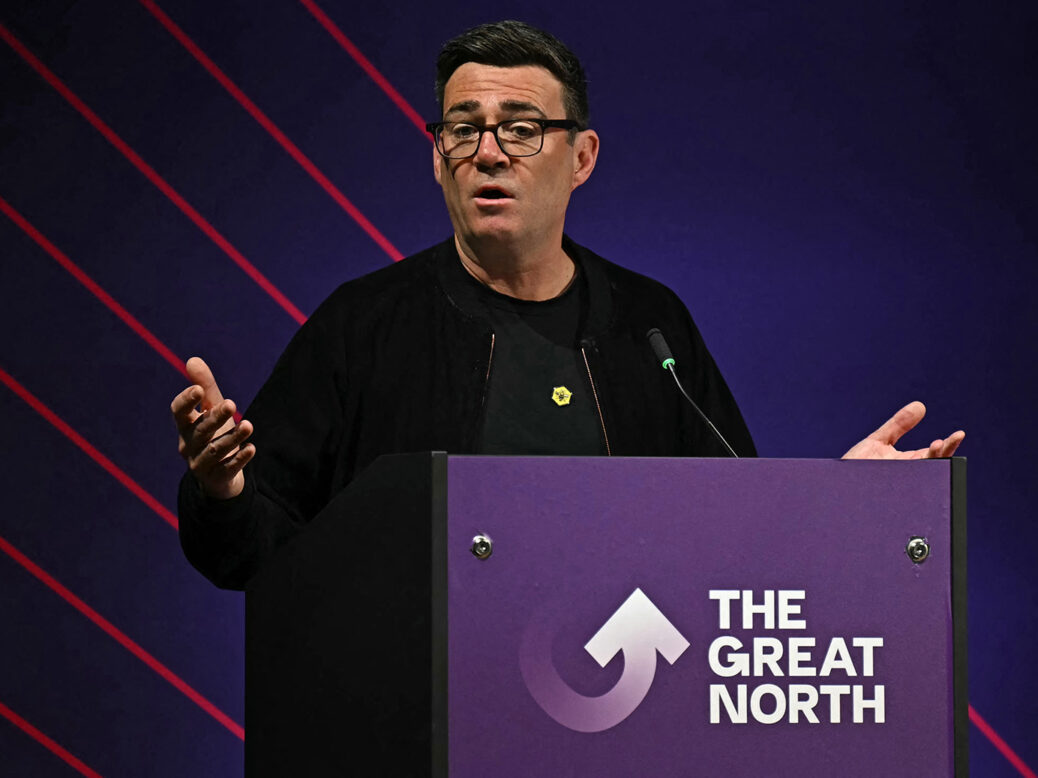
But everybody else said this was nonsense; I was just exaggerating as usual. So I offer what follows nervously. The Makerfield by-election is not just the most important by-election in British history; it is also a once-in-a-lifetime, all-out fight between social democracy and right-wing populism. If Andy Burnham can beat Reform in a seat where the local election result is against him – a Brexit bastion and a redoubt of the white working class – then Nigel Farage no longer looks like the next prime minister.
Labour would regain faith in itself. Arguments that had been settled would suddenly reopen. Reform, meanwhile, will fight this on a “beat Burnham and destroy Labour forever” ticket. If they win, they will leave a diminished Starmer premiership swinging in the wind, with a toxic left-right feud ready to gobble up what remains of Labour’s credibility.
But this is a double-or-quits moment. Burnham has gambled with his career, his status – everything. Instead of loftily sneering at his careerism or self-delusion, we should credit him, at least, with trying to change the weather. Often, this is how political change begins: with individual risk. But it is rare, and we should salute it.

Bigger than ever
So it’s big. Bigger than the 1938 Oxford by-election, which warned Neville Chamberlain of the growing hostility to his policy of appeasement towards Adolf Hitler? Yes. Makerfield will determine who becomes prime minister and whether the old system of party politics has any life left in it. Kinross and Western Perthshire in 1963 allowed Alec Douglas-Home, a former peer, into the Commons following the Profumo Affair and Harold Macmillan’s emergency prostate operation and resignation. For 20 days, Douglas-Home was prime minister without being an MP nor a member of the House of Lords. But that by-election was hardly a close fight, and it did not involve a sitting prime minister being obliged to campaign for a candidate who wanted to destroy him.
I can’t find a parallel for Makerfield in terms of drama or significance. I checked Iain Dale’s excellent anthology British By-Elections, which covers the 88 by-elections between 1769 and 2025. From that, I take a certain pleasure in the fact that it is voters – not social media, AI, commentators or ministers – who have the final say.
Many of them are former mining folk: Joe Gormley, who led the NUM in the 1970s, came from Ashton-in-Makerfield. Before that, it was the scene of religious confrontation. Miners in Ashton drove out a High Anglican vicar in Victorian times and were dispersed by troops. What will Tommy Robinson, with his army of Christian nationalists, make of that?
Oh well. It’s up to Ashton and Ince now. Dale quotes Abraham Lincoln: “Elections belong to the people. It’s their decision. If they decide to turn their back on the fire and burn their behinds, then they will just have to sit on their blisters.” So the carnival begins.
The puzzle of being alive
An attractive young woman eaten alive; terrible deaths; a cow ripped to pieces; adulteries – it was all very good fun. Into the Woods, the Stephen Sondheim musical playing at London’s Bridge Theatre, is absolutely bonkers: spectacular and beautifully sung. Based on Grimm fairy tales, it is a reminder that folk stories, like all worthwhile art, are really about the puzzle of being alive – the importance of courage and love, and the inevitability of bad things happening. Somehow, you come out feeling better about the world.
If, however, you are looking for something more political, everyone is raving about the The Resistible Rise of Arturo Ui revival by the Royal Shakespeare Company at Stratford. Starring Mark Gatiss, one of the country’s finest actors, it breaks the fourth wall to challenge the audience to engage with politics. I don’t suppose the RSC would be allowed to tour it to Makerfield…
Mining for an answer
A final reflection on an old mining constituency: how did the centenary of the General Strike earlier this month pass with so little comment? A defeat for the miners and the wider trade union movement, it was also the high-water mark of the possibility of revolution in this country – at least back then. Yet I have seen very little debate. We are losing much in this country: are we also losing our collective political memory?
[Further reading: The long coup]
Content from our partners



Related

This article appears in the 20 May 2026 issue of the New Statesman, Definitely, maybe
Join the debate
Subscribe here to comment